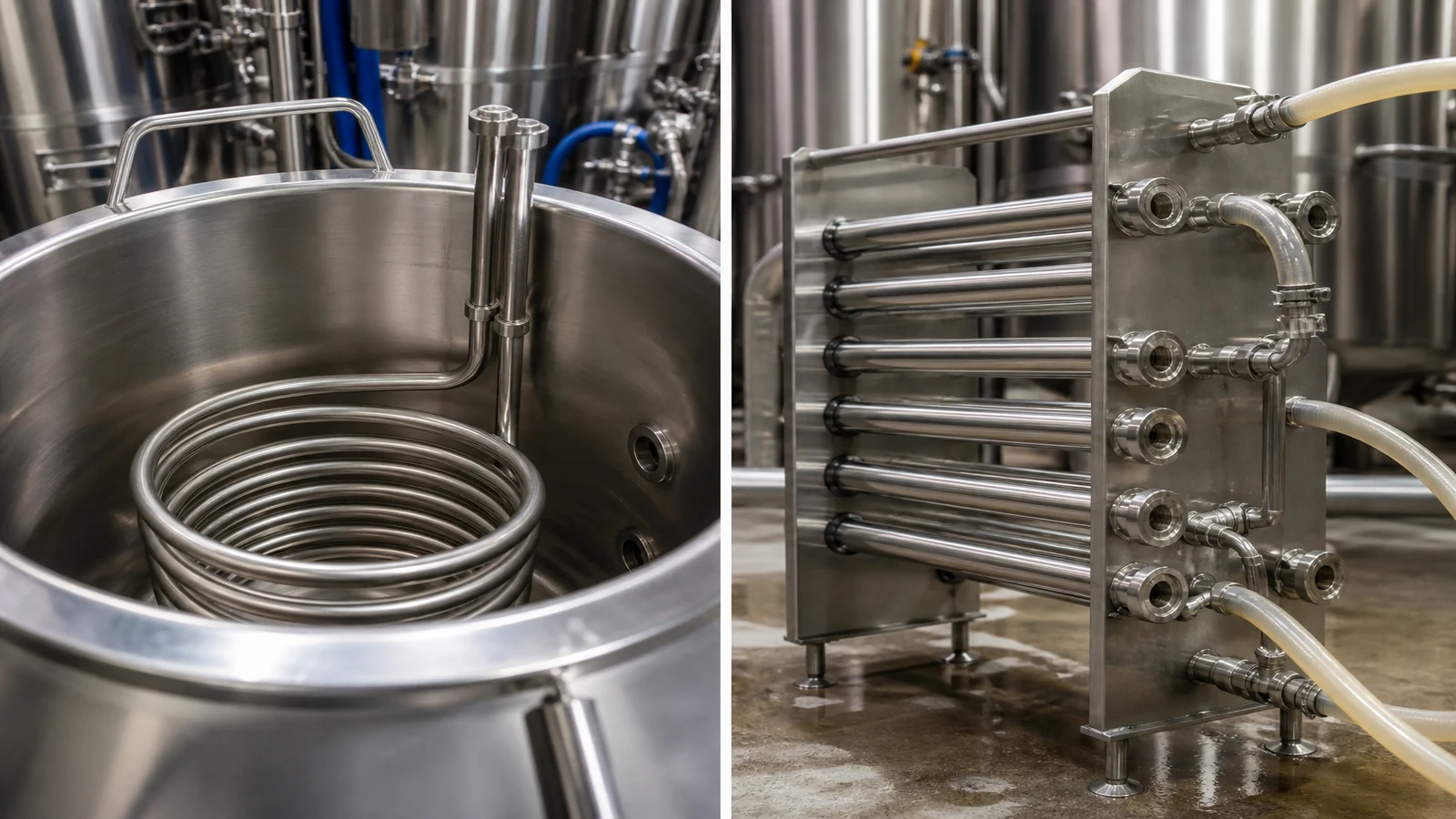
Is a Counterflow Chiller Worth It for 23 Litre Homebrew Batches?
Short answer: a counterflow chiller can be worth it if you brew 23 litre batches often and want a more compact, continuous chilling process, but it is not automatically the best first upgrade. Many UK homebrewers will still find a simple immersion chiller easier to clean, inspect, and live with.
For homebrewers, chilling choice depends on batch size, tap-water temperature, cleaning effort and how repeatable you want the end of brew day to feel.
What a counterflow chiller changes
An ice bath can suit small stove-top batches, but it becomes slow and awkward as the pot gets heavier or the wort volume climbs. The upgrade case is strongest when cooling regularly delays transfer.
Why cleaning effort matters
UK summer mains water can make the final cooling stage slower. If the water entering the chiller is already warm, patience, recirculation or a pre-chiller may matter more than changing the coil alone.
When an immersion chiller is the easier choice
For common 20-23 litre all-grain batches, an immersion chiller is often the simple step up because it is easy to see, clean and sanitise. Counterflow setups can be compact, but cleaning discipline becomes more important.
When counterflow starts to make sense
Inspect copper and stainless coils before use. Light tarnish is different from stubborn green-blue corrosion, pitting or flakes that cannot be cleaned away.
Questions to answer before upgrading
Plan hose connections, drainage, sanitising time and post-chill cleaning before the boil finishes. Most rushed cooling problems start before the chiller touches the wort.
Quick buying checklist
- Match the chiller to your normal batch volume.
- Check hose connections and drainage before the boil ends.
- Consider summer tap-water limits.
- Inspect and clean the coil before use.
- Choose the setup you will clean properly every time.
FAQ
Is this a job for a beginner?
Yes, as long as you keep the decision simple, check the fit or setup carefully, and avoid treating one measurement or label as the whole answer.
What should I check before buying a tool or accessory?
Check the product instructions, the job you actually need to do, and whether the item matches your vehicle, appliance, clothing use, garden system, brew-day setup or burner arrangement. If the fit or rating is unclear, pause rather than guessing.
Final buying advice
Upgrade when the cooling step is the part of brew day that regularly costs time or confidence. A simple, cleanable chiller usually beats a more complex setup that you dread using.