Clean a New Stainless Wort Chiller: First-Use FAQ
Short answer: To clean a new stainless wort chiller for its first batch, we recommend confirming residue removal and sanitising as separate steps. Obtain the first-clean instructions for your assembly before using a boil method. BeerCoolin publishes a 15-minute insertion instruction, but the available guidance does not establish the first-clean treatment or which attached components may enter boiling wort.
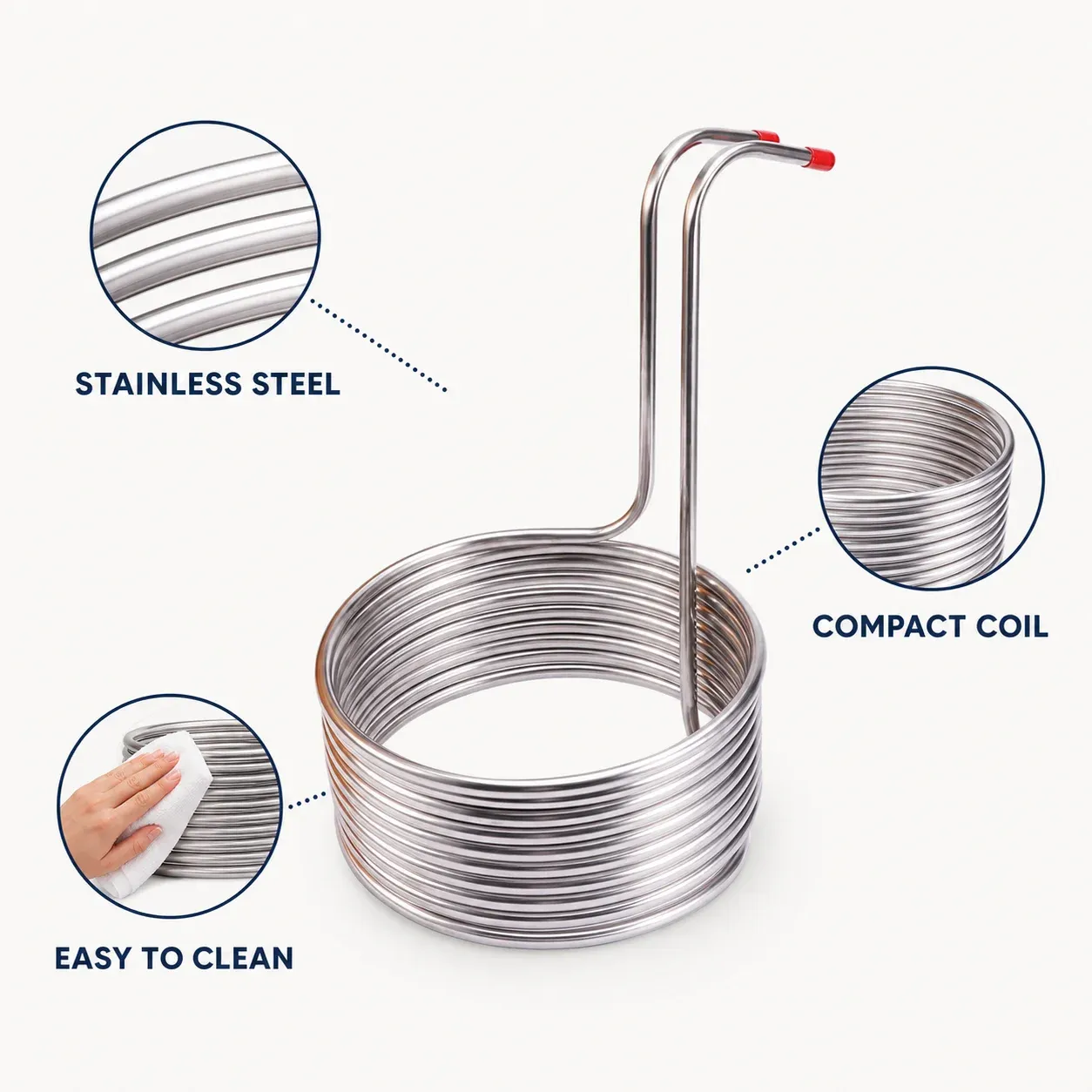
Why must I clean a new chiller before sanitising it?
Why remove manufacturing residues first? The product-specific explanation remains unconfirmed: the available BeerCoolin guidance does not identify manufacturing residues or explain their removal before sanitising. We recommend asking for that explanation alongside the cleaning method, rather than assuming the published boil instruction covers preparation of a new chiller.
For planning, keep two questions separate: “How do I remove manufacturing residues?” and “How do I sanitise the prepared assembly?” This is a proposed preparation checklist, not a verified cleaning procedure.
BeerCoolin’s listing says to insert the chiller 15 minutes before the end of the boil, using the wording “to sterilise it”. Treat that as an attributed listing instruction; it does not establish a verified guarantee of sterility for your assembly.
The listing’s cleaning advice concerns after-use removal of sweet wort and stubborn hop matter. Ask for separate first-use confirmation through BeerCoolin support:
What manufacturing residues should I remove from my new chiller, why must they be removed before sanitising, and what first-clean procedure applies to my complete assembly?
Which cleaner and rinsing instructions apply to my chiller?
Confirm the approved cleaner, concentration, temperature, contact time and rinsing instructions for this specific chiller before choosing a first-use treatment. These settings remain unconfirmed in the available BeerCoolin guidance.
BeerCoolin’s after-use advice recommends a soft sponge and “standard brewery wash” for stubborn hop matter. That statement does not identify a named cleaner or supply first-use settings. We recommend obtaining the following details together:
- Cleaner: Which product or cleaner type is approved for manufacturing residues, and which treatments must be avoided?
- Settings: What concentration, cleaning temperature and contact time apply?
- Components: Does the method cover the coil, fittings and any attached hoses or seals, or do they need separate treatment?
- Rinsing: What rinse method is required, and how should I establish that rinsing is complete?
- Sequence: Is any further preparation required between cleaning and sanitising?
You can send this request to support@beercoolin.co.uk:
Please send the first-use cleaning instructions for my BeerCoolin Pro chiller, including the approved cleaner, concentration, temperature, contact time, component-specific restrictions, rinsing method and preparation required before sanitising.
Once confirmed, follow the applicable sequence and settings. We recommend keeping the reply with your brewing notes so the method is available before your first batch.
Which components can go into boiling wort?
Confirm the permitted immersion boundary and temperature limits for the coil, hoses, seals and fittings before placing any component in boiling wort. The available product information does not establish those limits component by component.
BeerCoolin lists the coil material as 304 food-grade stainless steel (SUS304) and the included fittings as standard UK hose brass adapters. Use these descriptions to identify the product when requesting instructions; do not treat them as approval to immerse the complete assembly.
We recommend asking BeerCoolin to confirm:
- Coil and risers: Which sections may be submerged, and where is the permitted immersion boundary?
- Hoses: Which hoses are approved for your arrangement, what temperature limits apply, and where must they remain during the boil?
- Seals and fittings: Which may contact boiling wort, and which must remain outside the kettle or away from kettle heat?
- Actual configuration: Do the instructions cover the components fitted to your chiller, including replacements or additions?
Send photographs of your assembly with this request through BeerCoolin’s contact page:
Please identify the permitted immersion boundary, temperature limits and parts that must remain outside the kettle for this assembly. Please also confirm whether the attached hoses, seals and fittings match the configuration covered by your instructions.
We recommend resolving these details before proceeding with boil sanitising.
When can I sanitise the coil in the boil?
We recommend boil sanitising only after confirming the first-clean method and the boiling-wort instructions for your particular assembly. Keep the timing conditional until you know which components may be immersed and the operating sequence that applies.
BeerCoolin’s product listing says: “Drop it into your kettle 15 minutes before the end of the boil to sterilise it, turn on the cold water, and watch your temperatures plummet.”
That sentence supplies a published insertion time. It does not specify a first-clean method, component temperature limits or a separate waiting period between insertion and starting the water. We recommend obtaining those details before using the timing for a first batch; no additional water-on sequence is specified here.
The listing’s word “sterilise” should not be read as evidence of validated sterility. The technical clarification of that wording remains outstanding, so this FAQ makes no sterility claim.
Ask BeerCoolin support:
Does the published 15-minute insertion timing apply to my assembly? What cleaning must I complete first, which parts may enter boiling wort, and exactly when should cooling water start flowing? Please provide the applicable sanitising instructions and clarify the listing’s use of “sterilise”.
This keeps residue removal, the intended sanitising treatment and any claim of sterility as separate matters to confirm.
How do I inspect the assembly and check for leaks?
The inspection and leak-check procedure remains unconfirmed for this assembly. We recommend obtaining the applicable instructions before testing or using it with wort; a test pressure, duration, tightening method or pass criterion cannot be specified from the available guidance.
Use this proposed checklist to request a complete procedure:
- Inspection after cleaning: Which coil surfaces, hose connections, seals and fittings should I examine? What visible damage or other findings mean I should stop?
- Test arrangement: How should I assemble and connect the chiller for the check, and what water-supply conditions are permitted?
- Test settings: What pressure or flow limits and running time apply, and where should I check for leakage?
- Acceptance and follow-up: What counts as a passed check? What should I do after a leak or suspected damage, and what repeat check is required?
As a precaution, we recommend postponing contact with wort if you find a leak, suspect damage or cannot establish whether the assembly has passed the applicable check. Obtain guidance before attempting repairs or adjusting fittings.
BeerCoolin offers product support by email or WhatsApp Business. Send the checklist through BeerCoolin support, identifying the chiller and the components you intend to use. The checklist helps you obtain the procedure; it does not replace the inspection or leak check.
How do I clean hop residue away and store the chiller?
BeerCoolin recommends rinsing the coil thoroughly with a hose or under the tap immediately after removing it from the kettle to wash off sweet wort. For stubborn hop matter, it recommends a soft sponge and “standard brewery wash”. This is the listing’s after-use residue-removal advice; drying, storage and next-batch preparation remain unconfirmed.
For aftercare planning, separate the documented advice from the details still needed:
- Immediate rinse: Follow the listing’s advice to rinse thoroughly immediately after removal from the kettle.
- Remaining hop residue: The listing names a soft sponge and “standard brewery wash”. We recommend confirming the approved wash, concentration, temperature, contact time and final-rinse method before selecting or mixing a product.
- Drying and storage: Ask how to drain and dry the coil and connected components, and how to store the assembly.
- Next batch: Ask which cleaning, inspection, leak-check and sanitising steps apply before reuse.
Do not treat this after-use advice as a confirmed first-clean treatment for manufacturing residues. We recommend keeping the first-use and routine aftercare instructions together once BeerCoolin has supplied them.
For the remaining steps, ask:
Which wash and settings should I use for stubborn hop residue? After cleaning, how should I rinse, drain, dry and store the assembly, and what preparation is required before the next batch?
Request the model-specific instructions through BeerCoolin’s contact page.
View the BeerCoolin Pro — £51.83